Performance Frameworks
To drive consistency and accountability across the newly integrated team, I implemented a comprehensive performance framework that aligned directly to the company’s growth objectives. Before the merger, Authenticom and Motive Retail each operated under different performance metrics, quota and bonus models, and reporting practices — many of which were difficult to compare or scale. This lack of alignment made it hard to evaluate productivity, reward results fairly, or motivate the team toward shared goals.
The first step was to assess both companies’ existing performance models. I worked with finance and operations to gather historic revenue data, segment-level customer insights, and prior-year sales performance. This gave me a clear understanding of the revenue contribution and seasonality patterns across segments and roles.
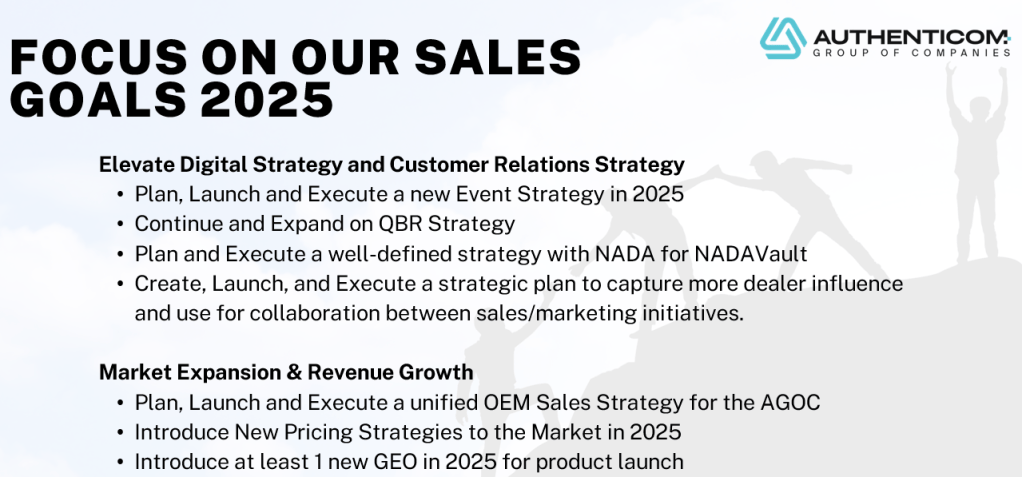
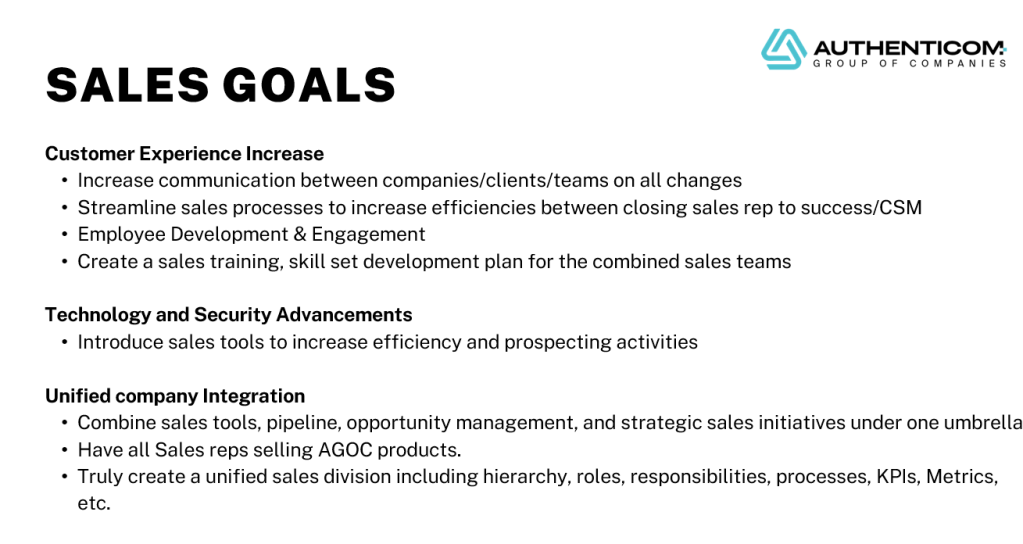
With that foundation, I developed a unified set of KPIs and introduced a new quota model that met several key criteria:
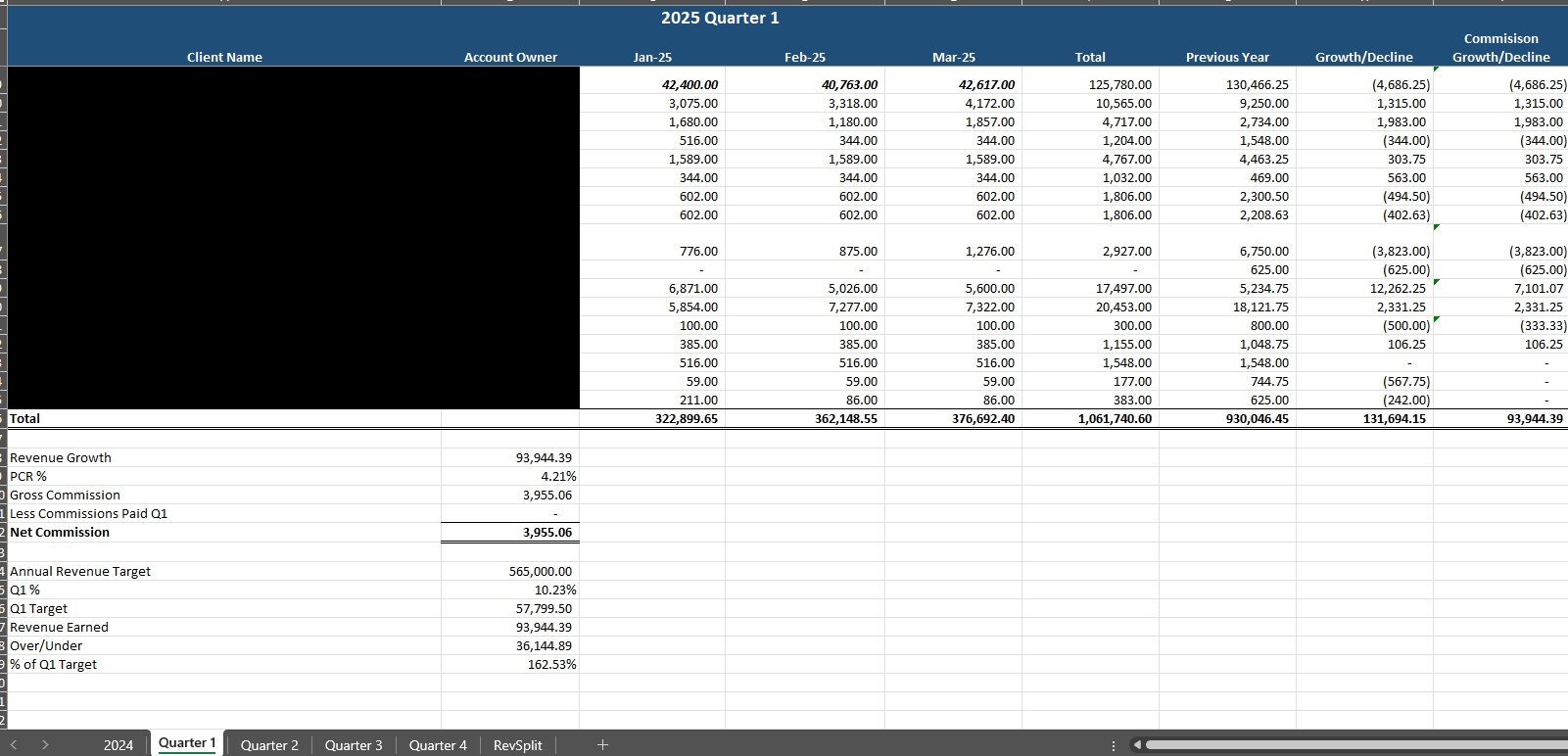
Segment-Appropriate: Quotas reflected the revenue potential and maturity of each customer segment — new logos, expansion, and retention.
Role-Specific: Sales team members had targets aligned to acquisition, while customer success roles had metrics tied to retention and cross-sell.
Scalable & Transparent: All KPIs could be tracked via centralized dashboards, reviewed weekly by leadership, and shared with individual contributors for self-monitoring on a monthly basis.
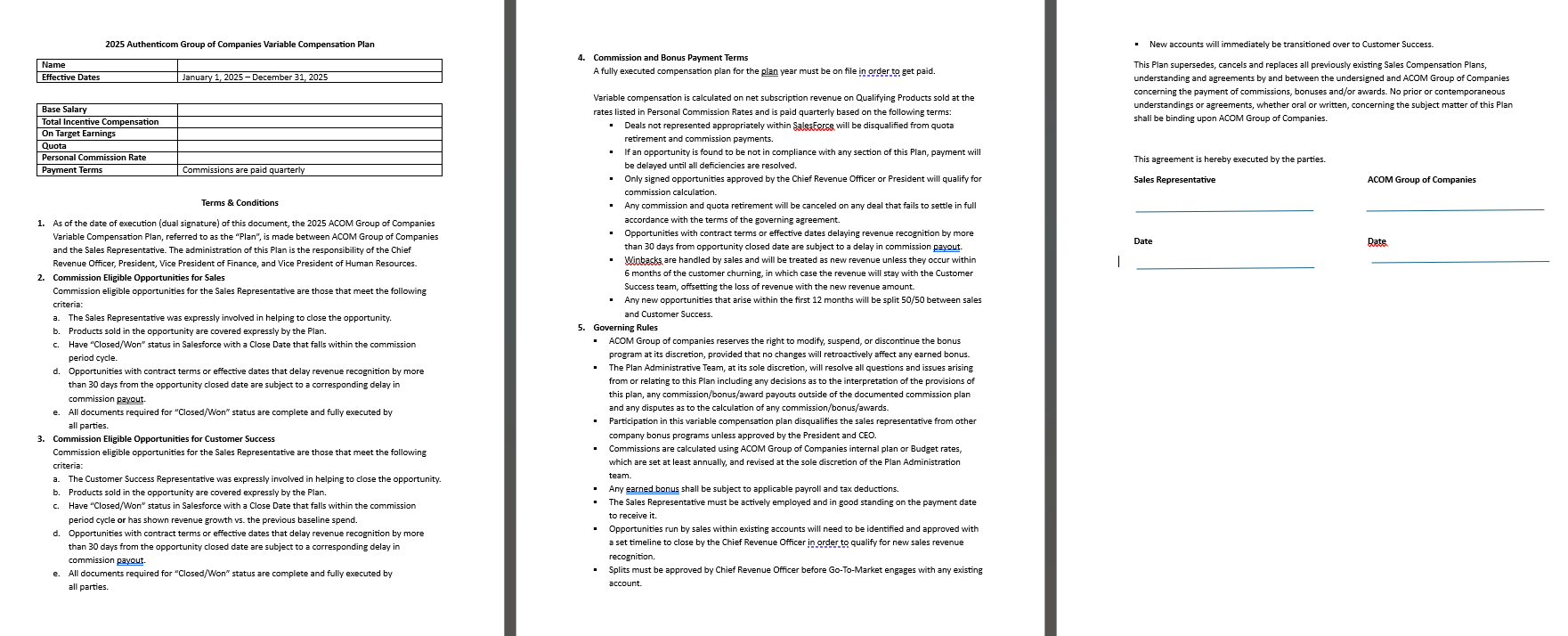
In parallel, I worked with our Chief Revenue Officer and Human Resources to tie these KPIs to a new compensation structure. Bonuses and commissions were recalibrated to reward both individual performance and team-based outcomes, reinforcing a culture of accountability and shared success.
Below are some of the deliverables created for this section of the project. While I am not able to share entire working documentation due to being confidential and live working documents, I have inserted screenshots for review.
Throughout this phase, I learned that designing a performance framework is not just a financial or operational exercise — it’s a leadership challenge that shapes culture, motivation, and trust. One of the key lessons I took away was the importance of clarity with context. Simply telling someone their new quota is not enough. You must explain how it was set, why it’s fair, and how they can realistically achieve it.
I also learned that standardization needs to be balanced with flexibility. While leadership needed a unified view of performance, frontline team members wanted metrics that reflected the nuance of their customer base and role. Through stakeholder feedback and field testing, I was able to refine the framework in a way that felt rigorous but human-centered.
Finally, I realized that visibility builds engagement. The introduction of live dashboards not only improved operational transparency — it also gave team members a sense of ownership over their progress. Seeing real-time metrics created momentum and encouraged proactive conversations around performance, support, and accountability.
 Lead to Inspire